
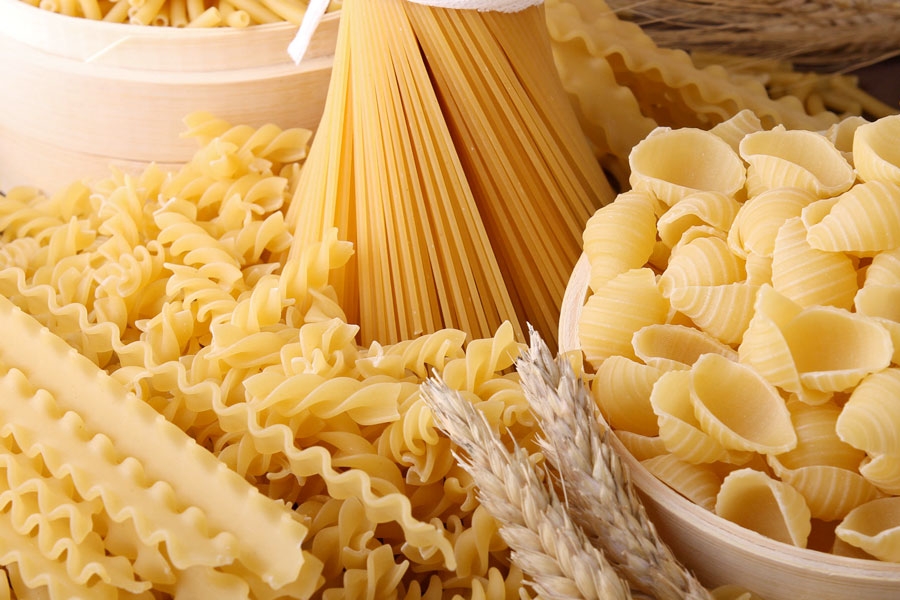
The Story of Pasta
Even the documents found in the Pasta Museum in Rome today cannot provide sufficient information about the true origins of pasta.
Explanation
Throughout history, many studies have been conducted to determine which civilization first discovered and made pasta, but the identity of the “first” remains unclear. Even the documents preserved in the Pasta Museum in Rome do not provide conclusive answers.
In 1292, historical records state that Marco Polo brought spaghetti and information about its preparation from China to Italy. However, pasta-like preparations and consumption were already present in Ancient Greek and Roman cultures. Archaeological evidence shows that pasta was made and consumed by Greeks, Romans, Chinese, and Arabs. Records indicate that the Chinese began producing pasta with barley noodles in pre-Christian times, while 5th-century BC Syrian writings show Arabs making and eating barley noodles. In the Roman work De re coquinaria by Marcus Gavius Apicius (1st century BC), a dish called “lagana” (considered the ancestor of lasagna) was described.
Later records reveal that Arabs dried dough wrapped around sticks under the sun for storage. By the 10th century, dried noodles and pasta were already being traded in the Arabian Peninsula.
Until the 20th century, pasta continued to be produced and consumed mainly in Italy, the Arab world, and China. Thanks to its affordability, versatility, and deliciousness, pasta consumption steadily increased. With advancing technology, production became cheaper and higher quality. Initially, semolina dough was mixed by foot due to its hardness, but by the 17th century machines began kneading pasta. King Ferdinand II of Naples commissioned engineer Cesare Spadaccini, who invented the first pasta machine.
By the 20th century, Italians had perfected pasta production and began exporting. In 1913, Italy exported over 70,000 tons, a record at the time. The fully automatic pasta machine, still the basis of today’s production, was invented in 1933 by Mario and Giuseppe Braibanti of Parma.
In Turkey, the first pasta factory was founded in Izmir in 1922 by Hasan Tahsin Bey under the name “Türk Makarna Fabrikası”. With only 10 workers and a daily capacity of 850 kg using the manual “el presi” method, this factory marked the beginning of Turkey’s pasta journey. Thanks to the abundance of durum wheat in Turkey, pasta production rapidly developed.
By 2010, Turkey ranked 5th in the world for durum wheat production alongside the USA. In 2011, with 741,000 tons of pasta produced, Turkey was also the 5th largest pasta producer worldwide.
How pasta is produced
All types of pasta are made from “durum wheat.” Production consists of 5 main stages:
-
Cleaning & Conditioning: Wheat is cleaned, moistened, and tempered.
-
Milling & Sieving: The wheat is ground into semolina, separating bran and by-products.
-
Mixing & Shaping: Semolina is mixed with water, kneaded, enriched, and shaped under pressure.
-
Drying & Resting: Pasta is partially dried, rested, then fully dried to prevent microbes and preserve shape.
-
Cooling & Packaging: Finally, pasta is cooled and packaged in various weights.