
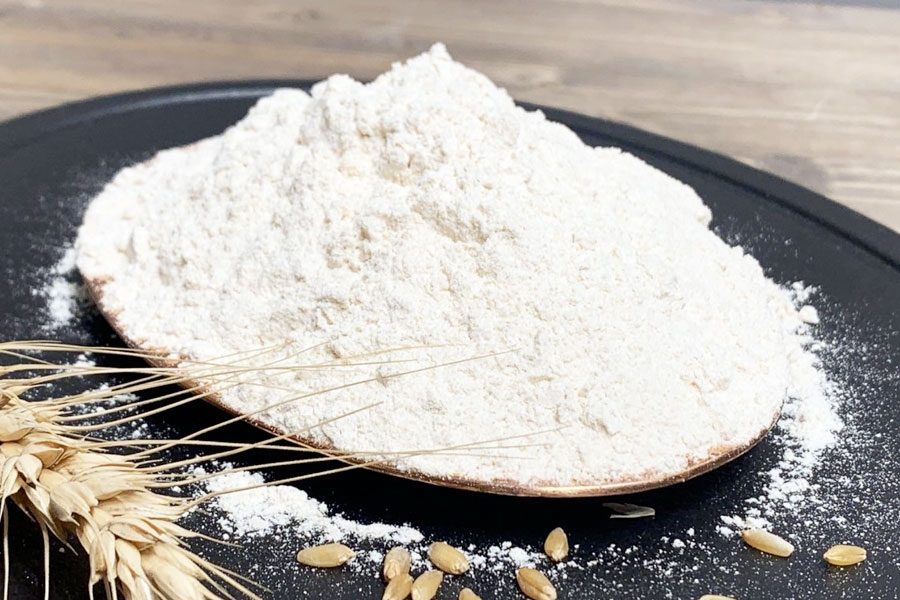
Types of Wheat Flour
Wheat flour is the name given to the fine powder obtained by grinding wheat.
Explanation
Wheat flour is the fine powder obtained by grinding wheat. Flour obtained from wheat is usually referred to simply as “flour.” Flour can also be made from barley, oats, rye, corn, chickpeas, and similar plants, and these are generally named according to the grain they are made from (e.g., corn flour, barley flour).
The wheat kernel consists of 3 main parts:
-
Bran (pericarp)
-
Germ (embryo)
-
Endosperm
During milling, these three parts can be separated and recombined in different ways to produce various types of flour.
Bran
The bran makes up about 14.5% of the wheat grain. In whole wheat flour, bran contains about 86% niacin, 50% pantothenic acid, 42% riboflavin, 33% thiamine, 19% protein, and a high amount of cellulose.
Germ
The germ makes up about 2.5% of the wheat grain. It contains the highest oil content, which is why it is used in wheat germ oil production. Its composition includes 26% riboflavin, 21% pyridoxine, 8% protein, 7% pantothenic acid, and 2% niacin.
Endosperm
The endosperm makes up about 85% of the wheat grain and is the main source of protein. About 70-75% of the endosperm consists of protein. Flour is produced mainly from this part.
Classification of Wheat
According to botanical structure, wheat is divided into three main groups:
-
Triticum aestivum (bread wheat)
-
Triticum durum (durum wheat – used for pasta)
-
Triticum compactum (club wheat – used for biscuits)
Wheat is also classified by hardness, kernel color, and planting season:
-
By hardness: hard wheat, semi-hard wheat, soft wheat
-
By color: red wheat, white wheat
-
By planting season: spring wheat, winter wheat
The choice of wheat by industry depends on flour yield and intended use. For example, bread wheat is preferred for its high protein and quality, while biscuit wheat requires low protein. Pasta production uses durum wheat. Accordingly, protein values of flours differ depending on the wheat type.
Common Types of Wheat Flour
-
White Flour: Obtained from the endosperm only.
-
Bread Flour: Made from hard, high-protein wheat. Protein content ranges between 12% – 14%.
-
All-Purpose Flour: Obtained from hard wheat or a mixture of hard and soft wheat. Protein content ranges between 8% – 11%. Used in cakes, cookies, biscuits, and pastries.
-
Cake Flour: Low protein (7% – 9%) and high starch content. Ensures softness in cakes.
-
Pastry Flour: Protein level is between cake flour and all-purpose flour (8% – 9%). Commonly used for crackers, cakes, and cookies.
-
Self-Rising Flour: Contains added baking powder and salt, so it rises on its own. Not suitable for bread, mainly used for biscuits.
-
Gluten Flour: Highest protein content (40% – 45%), very low starch. Made from high-protein spring wheat.
-
Semolina: Coarsely ground from durum wheat endosperm. Rich in gluten, used in pasta and couscous production.
-
Durum Flour: Obtained by grinding semolina. Enriched and used for noodles and vermicelli.