
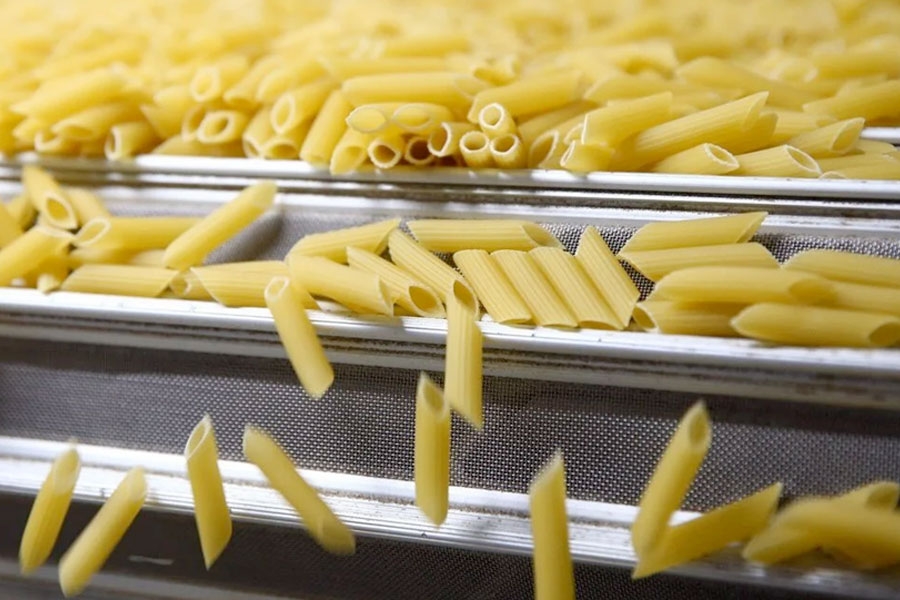
World Pasta Market
According to the International Pasta Organization (IPO), a total of 13.5 million tons of pasta were produced worldwide in 2013.
Explanation
The demand for pasta is increasing almost everywhere in the world. According to IPO data, in 2013 global pasta production reached 13.5 million tons. This growth is driven by pasta being easy to cook, affordable, and highly nutritious due to the durum wheat used. Moreover, pasta can be prepared with a wide range of sauces to suit different culinary traditions, making it a universally accepted dish.
Pasta dough is obtained by mixing semolina (from durum wheat) with enriching ingredients and water. After shaping and drying, pasta is produced. Since durum wheat only grows in specific regions of the world, pasta production was historically limited. However, thanks to global trade, pasta production has expanded, with durum wheat-producing countries leading exports.
Pasta is one of the world’s most important foods, both nutritionally and in terms of production volume. Its long shelf life, versatility, nutritional value, and affordability are among the main reasons behind the continuous rise in global consumption.
The exact origins of pasta consumption remain unclear. Chinese, Etruscans, Arabs, Persians, Greeks, and even Americans have all claimed its invention, but Italy is widely recognized as the homeland of pasta. Some sources trace its history back 4,000–8,000 years. Pasta was already known in Ancient Greece and Rome, and today, Italy remains the leader in both production and consumption. Pasta later spread globally, especially through Italian migration to the Americas.